

Minister Katelynas and regional interior ministers call on the EU to recognise the true scale of migration pressure at its eastern border
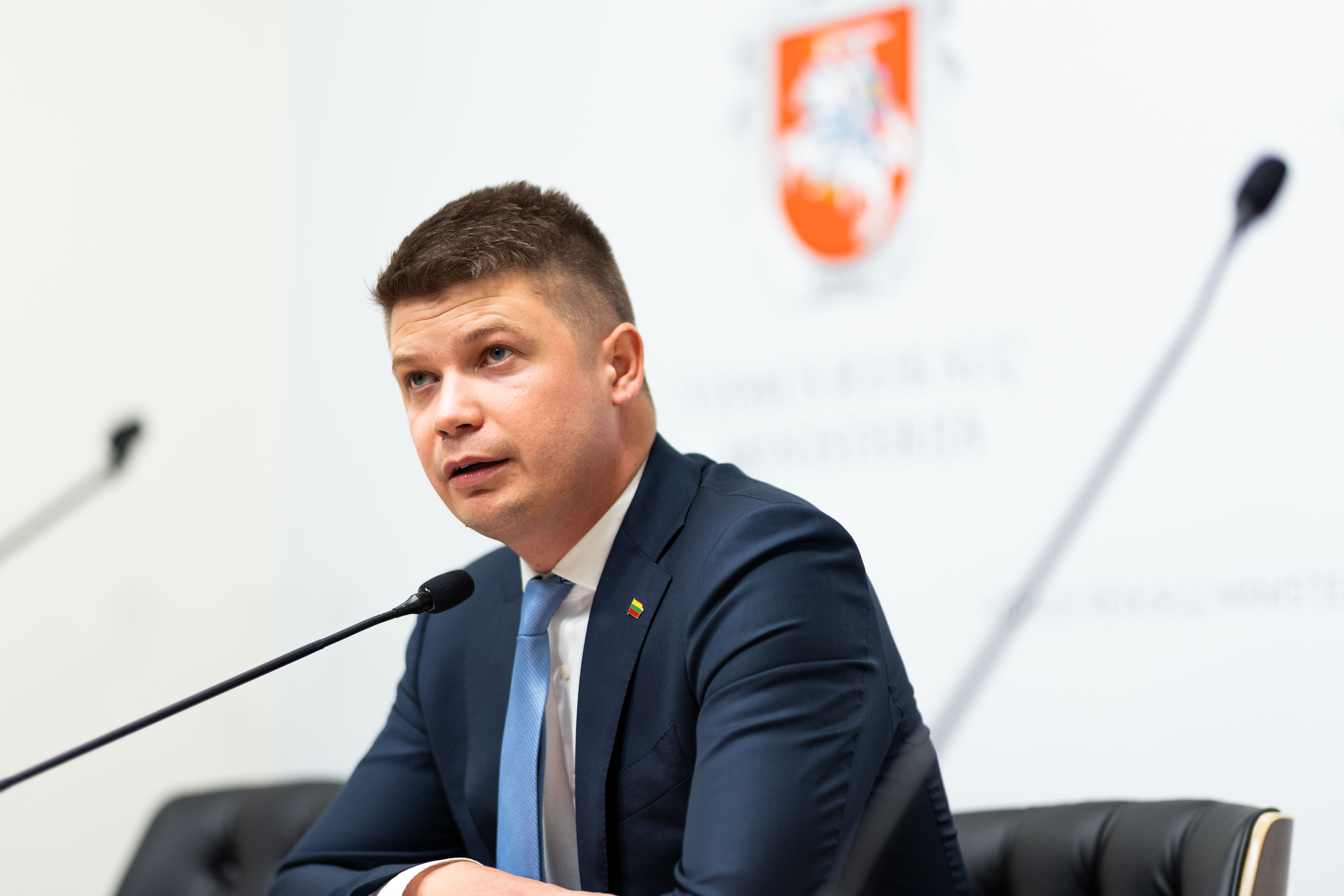
The interior ministers of Lithuania, Poland, Latvia, Estonia and Finland, in a joint letter initiated by Poland, are calling on the European Commission to take into account not only successful irregular border crossings, but also prevented attempts to cross the EU’s external border illegally when assessing migratory pressure on European Union Member States. According to the ministers, only such an approach can provide an objective picture of the actual pressure faced by countries protecting the EU’s eastern border.
The letter is addressed to European Commissioner for Internal Affairs and Migration Magnus Brunner. It stresses that statistics based solely on successful irregular border crossings do not reflect the true scale of migratory pressure, as a significant proportion of attempts to enter the EU are prevented precisely because of strengthened border protection and measures taken by Member States.
“If we count only those cases where the border was successfully crossed illegally, we end up with a paradoxical situation: the more effectively a country protects the European Union’s external border, the less migratory pressure appears in the statistics. Prevented attempts do not simply disappear – they are precisely what shows the real pressure our border guards face every day,” says Minister of the Interior Martynas Katelynas.
EU Member States along the eastern external border employ legal, operational, financial and diplomatic measures to protect the Union’s external border. As a result, a significant share of attempted irregular entries into the EU are prevented and therefore do not appear in statistics on successful irregular border crossings.
The ministers emphasise that the instrumentalisation of migration at the EU’s eastern border is not a conventional migration phenomenon. Since 2021, migration has been used as an instrument of hybrid pressure and as part of broader hybrid activities aimed at testing the resilience of the EU and its Member States and exerting long-term pressure. The geographical proximity of Russia and Belarus adds a further security dimension for countries located along the EU’s eastern border.
Including prevented irregular border crossing attempts is also important when decisions are made on EU solidarity measures. Under Regulation (EU) 2024/1351 of the European Parliament and of the Council on asylum and migration management, the European Commission prepares an Annual European Asylum and Migration Report. This report is used to assess the migration situation in Member States, determine solidarity needs and establish the Annual Solidarity Pool.
“We cannot create a system in which a Member State is effectively penalised for successfully protecting the European Union’s external border. In the case of the eastern border, the number of prevented attempts is one of the key indicators of the true scale of migratory pressure,” Minister Katelynas says.
The ministers of Lithuania, Poland, Latvia, Estonia and Finland are calling on the European Commission to use already collected, documented and verifiable data on prevented irregular border crossing attempts in the methodology applied when preparing future Annual European Asylum and Migration Reports. This would allow for a more accurate assessment of actual migratory pressure and ensure that effective protection of the EU’s external border is not paradoxically interpreted as evidence of lower pressure on a Member State.
In their joint letter, the ministers also thank the European Commission for its support in countering the instrumentalisation of migration and other hybrid threats, as well as for additional funding to strengthen the security of the EU’s external borders.
Skirmantas Lisauskas/BNS nuotrauka.