

Minister V. Kondratovičius: Baltic Sea Region Countries Agree to Strengthen Defenses Against Airspace Threats
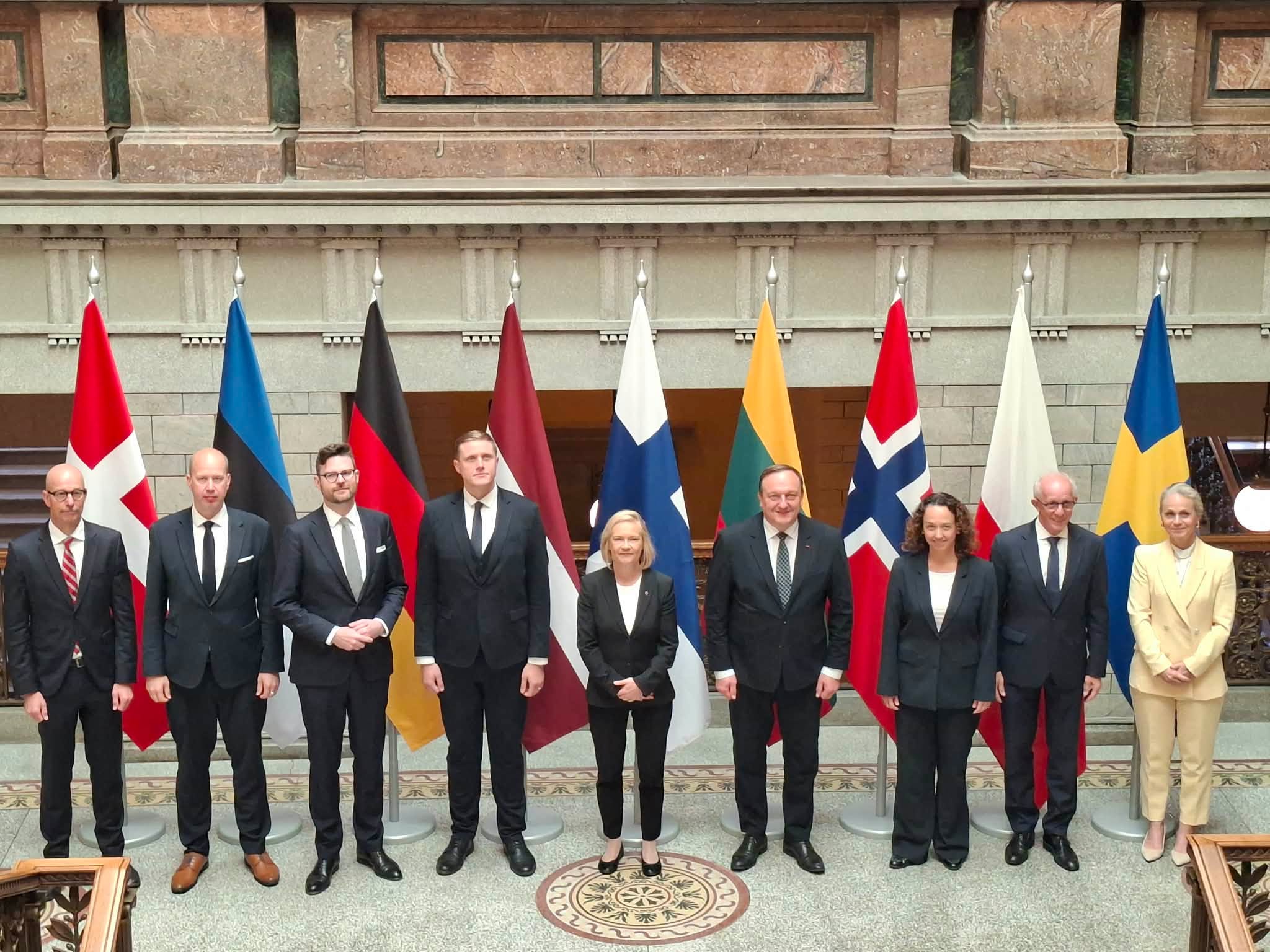
Minister of the Interior Vladislavas Kondratovičius participated in a meeting of Baltic Sea region ministers focused on security issues and strengthening regional resilience.
During the meeting, Lithuania, together with Denmark, Estonia, Finland, Germany, Latvia, Norway, Poland, and Sweden, issued a joint statement calling for closer cooperation in addressing threats posed by drones, weather balloons, and other unmanned aerial objects. The countries agreed to work together to ensure that the next EU budget places a stronger emphasis on countering hybrid threats and enhancing resilience.
The statement highlights the countries’ commitment to strengthening drone and counter-drone capabilities, conducting joint exercises, expanding information sharing, implementing pilot projects, promoting joint procurement initiatives, and supporting research and innovation. The partners also aim to deepen cooperation with Ukraine by drawing on its practical experience in countering aerial threats and protecting critical infrastructure.
“Our security environment has changed fundamentally in recent years. Drones, balloons, and other unmanned objects are no longer isolated incidents—they are part of a broader pattern of hybrid activities designed to disrupt our societies, create uncertainty, and exert psychological pressure on our populations. We must therefore act without delay and strengthen Europe’s preparedness and resilience,” said minister V. Kondratovičius.
On May 20, Lithuania issued an air raid alert for the first time since the restoration of its independence, urging residents to seek shelter.
The ministers stressed the need to accelerate the implementation of the European Commission’s Drone and Counter-Drone Security Action Plan, presented in February this year. In Lithuania’s view, the measures outlined in the plan are important, but implementation must proceed much faster, as the threats are already present along the European Union’s external borders.
Speaking about regional cooperation priorities, minister of the Interior emphasized the need to develop a common situational awareness system providing a comprehensive airspace picture across the Baltic Sea region, strengthen the entire response chain—from threat detection to neutralization—improve coordination between civilian and military authorities, and increase the involvement of EU agencies such as Europol and Frontex.
According to minister V. Kondratovičius, it is essential to secure adequate funding for new technologies, innovation, and capability development. This is particularly important in the context of the EU’s 2028–2034 Multiannual Financial Framework, which should properly reflect the security needs of the EU’s eastern border states and the challenges posed by hybrid threats.