

Minister V. Kondratovičius in Luxembourg: Schengen Area Security Must Be Strengthened in Response to Evolving Hybrid Threats
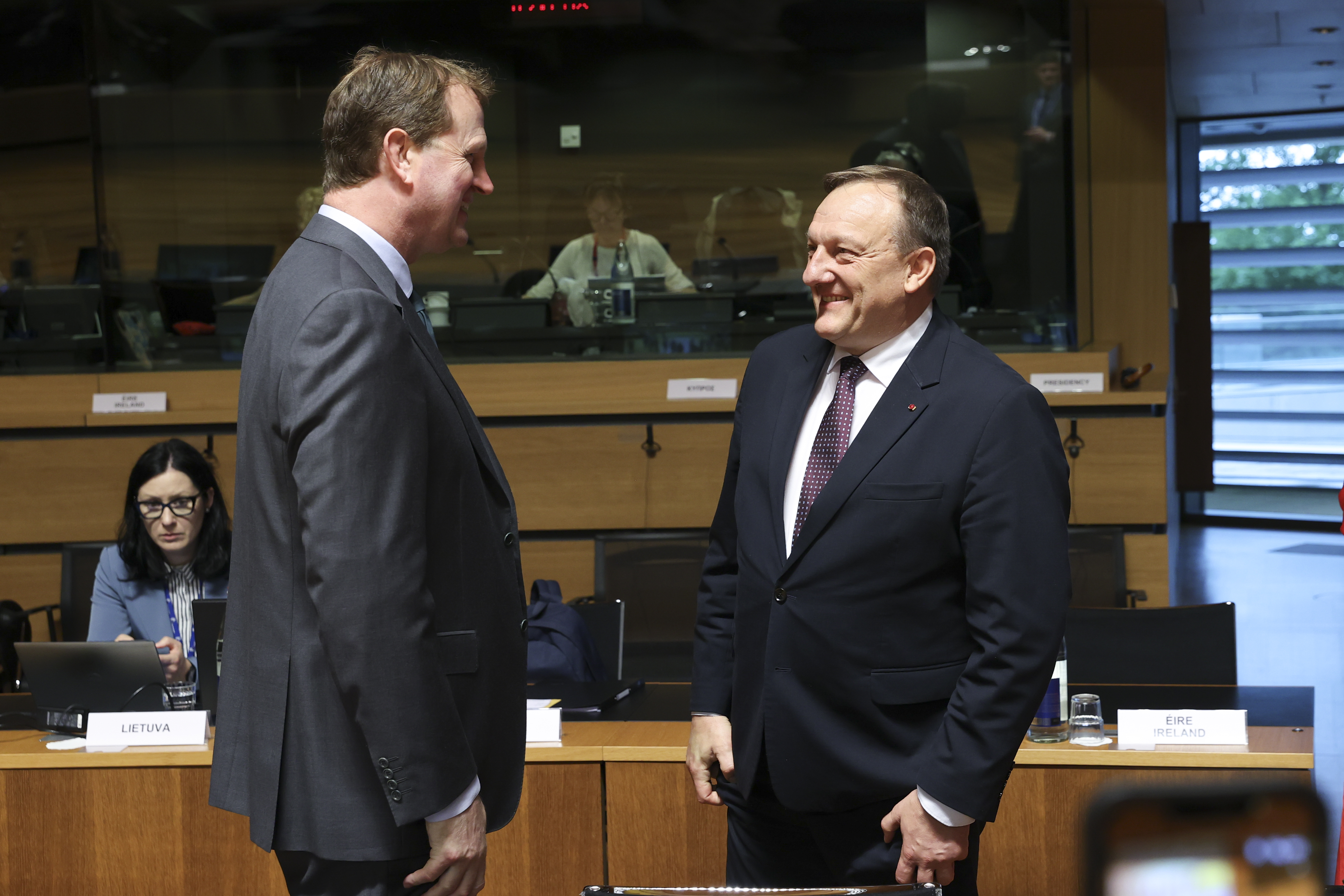
Minister of the Interior Vladislavas Kondratovičius participated in the meeting of the European Union’s Justice and Home Affairs Council in Luxembourg. During the meeting, ministers discussed the state of the Schengen Area, migration and return policies, the visa system, the future of internal border controls, and the impact of the current geopolitical environment on the EU’s internal security.
During the session, Minister V. Kondratovičius thanked the European Commission for its annual report on the state of the Schengen Area and welcomed the positive trends highlighted in the report, including a decline in irregular crossings at the EU’s external borders and improved effectiveness of return procedures.
At the same time, he stressed that the security environment is becoming increasingly complex and noted that the report lacks a broader strategic assessment of emerging security threats. Hybrid threats that are increasingly affecting the EU’s eastern external borders – such as drone incursions into airspace, smuggling operations using balloons, and the instrumentalization of migrants – were not addressed in the report.
Minister V. Kondratovičius devoted particular attention to visa policy, one of Lithuania’s priority areas. Lithuania has repeatedly raised concerns in the Council about the growing number of Schengen visas being issued to Russian citizens, yet no significant changes have been made so far.
“The continued increase in the issuance of Schengen visas to citizens of the Russian Federation is unacceptable and poses a serious security risk. We strongly support a targeted revision of the Visa Code and look forward to the Commission presenting a legislative proposal as soon as possible,” Minister V. Kondratovičius said.
On the external dimension of migration policy, it was emphasized that, in order to encourage third countries to cooperate on readmission, the EU should make full use of all available instruments, including both incentives and pressure measures.
One of the key objectives for the future of the Schengen Area should be the restoration of unrestricted free movement and the gradual phasing out of long-standing internal border controls. Minister V. Kondratovičius also stressed that achieving the agreed Schengen priorities will require adequate funding at both the EU and national levels. He added that policy decisions should be based on continuously updated situational assessments, including data on visa issuance, the instrumentalization of migration, and other hybrid threats.
Ministers also held detailed discussions on the future of temporary protection for people displaced by Russia’s war against Ukraine. The current protection regime is due to expire in March 2027. Lithuania supports extending temporary protection in its entirety for as long as the war continues and conditions do not allow for a safe return, warning that its termination would create legal and administrative challenges for Member States.
At the same time, Minister V. Kondratovičius stressed the importance of encouraging transitions to other forms of lawful residence, particularly for those who are employed, while maintaining protection for vulnerable groups and ensuring a coordinated EU-wide approach to prevent secondary movements between Member States.
Addressing the broader geopolitical context, Minister V. Kondratovičius emphasized that support for Ukraine and stability in the Middle East are directly linked to the EU’s internal security. He therefore called for closer cooperation among EU institutions, agencies, and Member States, as well as faster information sharing. He also drew particular attention to the growing hybrid threats that Lithuania faces on an almost daily basis.
“The changing security situation in our region has exposed Lithuania to a range of hybrid threats – from the instrumentalization of migration to airspace violations and GPS interference. This demonstrates that, at the EU level, there is still a lack of a common understanding of these challenges and of rapid response mechanisms,” Minister V. Kondratovičius stated.
The Justice and Home Affairs Council also discussed broader internal security challenges facing the EU, including organized crime, cyber threats, terrorism risks, and the impact of geopolitical conflicts on European security.