

European Commission to provide more than €32 million to strengthen border airspace surveillance capabilities
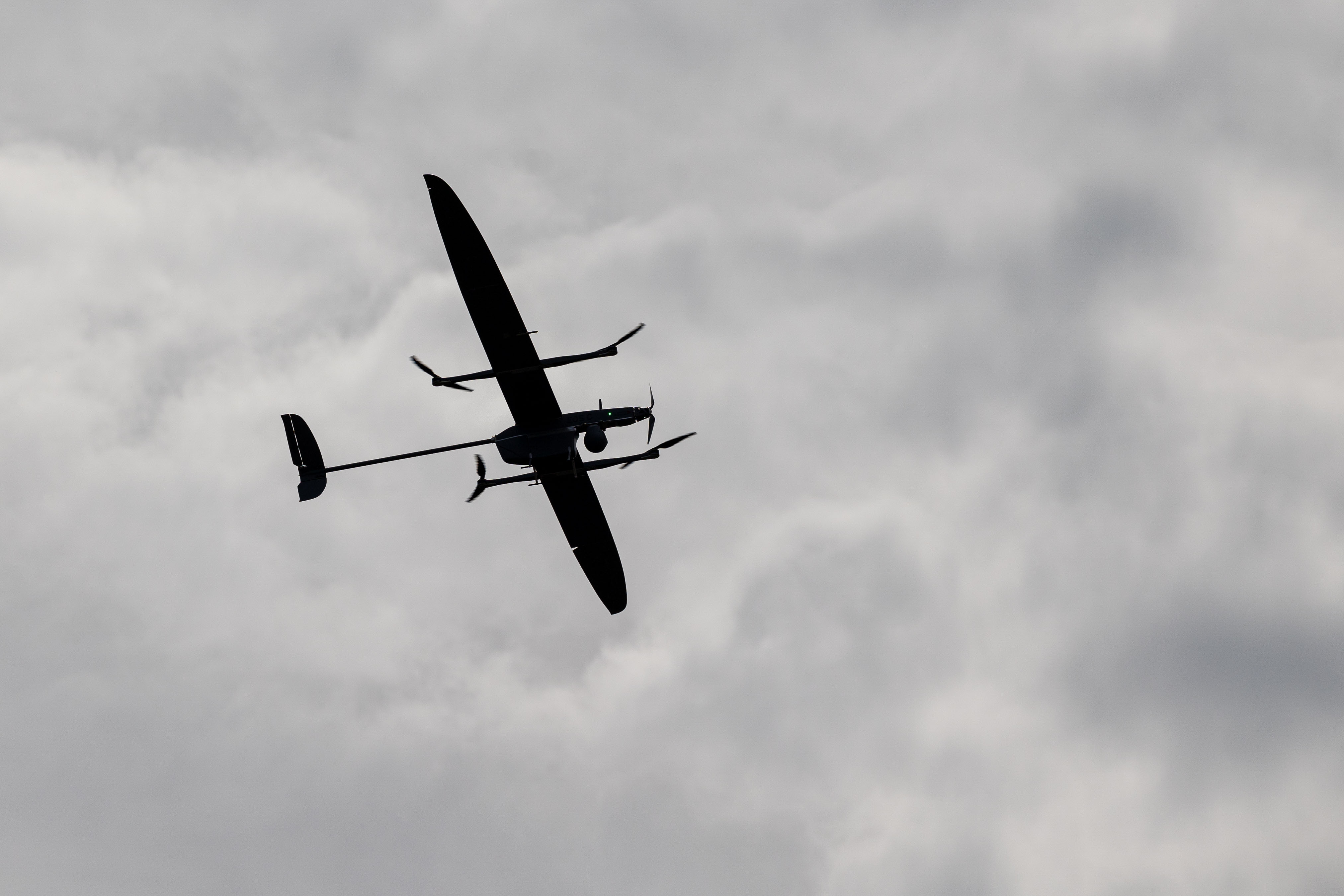
The European Commission has selected a project submitted by Lithuania’s State Border Guard Service to strengthen its aerial capabilities and airspace surveillance. The project was selected under the 2021–2027 Instrument for Financial Support for Border Management and Visa Policy call for applications for the specific action “Support for border management capabilities, including drones and counter-drone measures”. More than € 32 million is expected to be allocated to the project.
According to Minister of the Interior Martynas Katelynas, the funding allocated by the Commission will enable Lithuania to strengthen its airspace surveillance capabilities and ensure more effective protection of the state border in response to the changing geopolitical situation in the region.
“This is highly significant EU support for strengthening the security of Lithuania and the entire eastern border region. The current security environment and the heightened level of hybrid threats in our region require continuous efforts to strengthen state border protection and introduce modern surveillance solutions. Airspace surveillance capabilities are becoming an increasingly important component of the overall border protection system. We thank the European Commission for its support and its recognition that today’s security challenges require joint efforts and concrete investment in the security of European Union Member States,” Minister M. Katelynas said.
The State Border Guard Service project envisages the construction of towers equipped with airspace surveillance equipment, radars and drone neutralisation systems. It also provides for the acquisition of long-range and short-range drones and training for drone operators. Implementation is scheduled to begin in December this year and conclude in December 2029.
According to the European Commission, the funding is expected to strengthen the capacity of border authorities to detect and monitor illegal drone activity, hybrid threats and cross-border crime at the EU’s external borders. Sixteen EU Member States will receive funding.
“The fact that as many as 16 Member States applied for and will receive support demonstrates that responding to hybrid threats at the external borders is a shared concern of the European Union, rather than a matter for individual countries alone. We will continue to seek consistent European Union support for external border protection that reflects the actual threats. We attach importance both to the EU funding allocated to each Member State and to opportunities to obtain additional EU support when new challenges arise, as is the case with drones and hybrid threats. It is therefore particularly important that these additional EU funding opportunities be retained in the new Multiannual Financial Framework for 2028–2034,” Minister M. Katelynas emphasised.
In allocating the funding, the Commission took into account the section of the external border where the project would be implemented, the intensity and frequency of hybrid threats in that area, particularly at the most vulnerable external borders, and the score awarded to the application. On the basis of these criteria, Lithuania’s project was assigned to Priority Level 1.
Photo: Paulius Peleckis/BNS
Last updated: 15-10-2026
Related news:
Minister Katelynas and Polish minister discuss border security and secondary migration
Minister Katelynas in Luxembourg: Europe must move from discussion to results on migration
Minister Katelynas in Munich: the EU must manage migration more effectively
Minister M. Katelynas: The Baltic Sea Region Must Act Together in the Face of Hybrid Threats