

Minister M. Katelynas: Europe Must Act Decisively – Organised Crime and Hybrid Threats Know No Borders
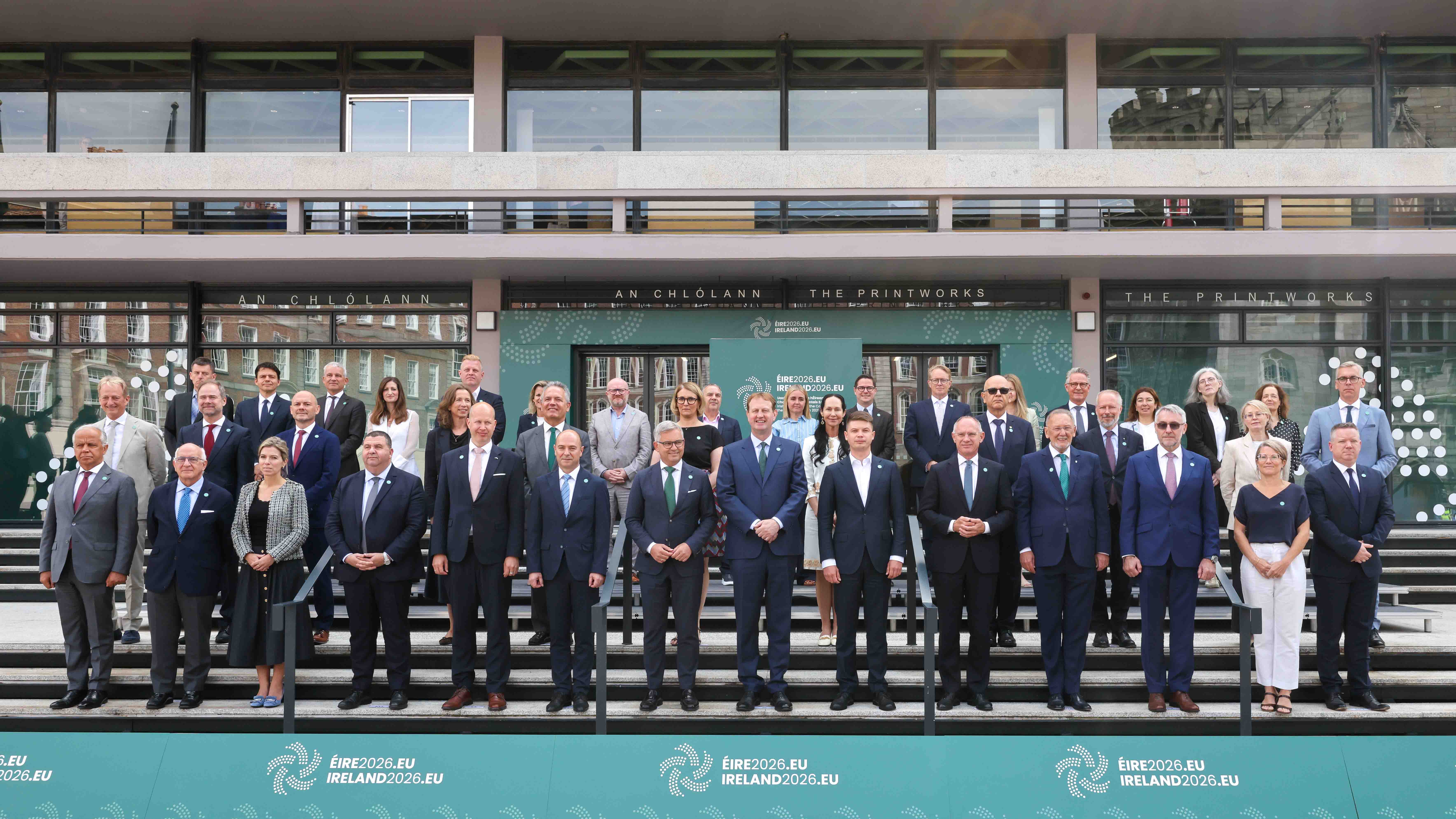
Minister of the Interior Martynas Katelynas is participating in the informal meeting of European Union Justice and Home Affairs Ministers in Dublin, where discussions are focused on combating organised crime, visa policy, information exchange and cooperation with third countries.
Ministers from EU Member States agreed that organised crime has long outgrown national borders and that isolated national measures are no longer sufficient to address increasingly complex security challenges. Protecting the European Union's internal security requires a coordinated, strategic and united response.
"Today's most dangerous criminal networks operate across borders, exploiting technology, legal loopholes and geopolitical conflicts. If Europe responds in a fragmented way, criminals will always stay one step ahead. We must act as one Union – decisively, strategically and in close coordination. Only a united European response will be strong enough to meet these challenges," Minister M. Katelynas said.
Lithuania stressed that cooperation with third countries must be based on clear commitments and deliver tangible results. This is essential not only in the fight against organised crime, but also in preventing sanctions circumvention, managing migration and ensuring compliance with readmission obligations.
During the meeting, Lithuania also highlighted the growing links between organised crime and geopolitical threats. Minister M. Katelynas emphasised that countering hybrid threats must become one of the key priorities of the EU's future security policy.
"Hybrid attacks are no longer a future scenario – they are today's reality. The European Union's funding priorities must reflect this reality and provide Member States with the resources they need to counter these threats effectively," Minister M. Katelynas said.
A significant part of the discussions focused on visa policy and the use of targeted restrictive measures. Lithuania expressed strong support for making broader use of such measures to safeguard the security of the Schengen Area.
"Visa policy is not only about migration – it is also an essential part of Europe's security policy. We must be able to act swiftly and decisively to restrict entry for individuals who may pose a threat to our security. Lithuania has consistently raised concerns about the growing number of tourist visas issued to Russian citizens and the security risks associated with this trend," Minister M. Katelynas said.
At the same time, Lithuania underlined that restrictive measures must remain proportionate and fully consistent with the European Union's fundamental values.
"Security and human rights are not competing priorities. On the contrary, they reinforce one another. That is why any restrictive measures must include clear exemptions for humanitarian cases, human rights defenders, independent journalists, dissidents and representatives of civil society," Minister M. Katelynas said.
The meeting in Dublin also addressed information exchange with trusted third countries. Lithuania emphasised that effective data sharing has become one of the most important tools available to modern law enforcement authorities.
As Minister M. Katelynas noted, information is now one of the most valuable security assets. Fast and reliable data exchange helps prevent crime, strengthens border security and improves migration management.
"Europe's security depends on our ability to make timely decisions. The more united Europe is, the less room there will be for organised crime, hybrid threats and those who seek to exploit Europe's openness as a vulnerability," Minister M. Katelynas concluded.