

Minister V. Kondratovičius: Lithuania Will Remain a Reliable Partner to Moldova on Its Path to European Integration
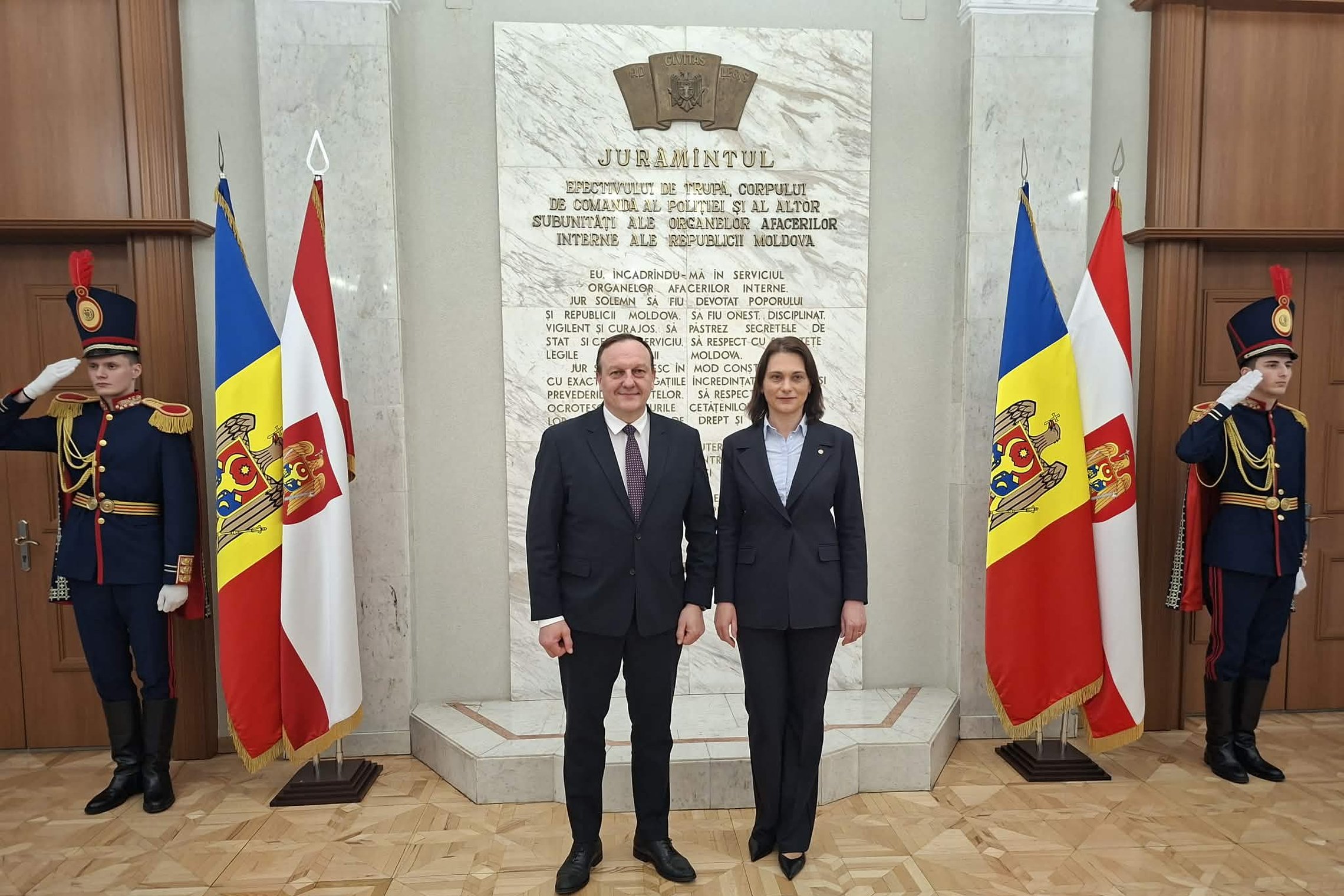
During a working visit to Chișinău, Minister of the Interior Vladislavas Kondratovičius met with Moldova’s Minister of the Interior, Daniela Misail-Nichitin, and attended the closing event of the European Union–funded project “EU4REFORMS – DNA.” The meeting focused on bilateral cooperation, the regional security environment, and Moldova’s progress in implementing reforms aimed at European integration.
“Lithuania has been and will continue to be a reliable partner to Moldova on its path toward the European Union. We firmly support the ongoing reforms and stand ready to share our experience in strengthening public institutions, particularly in the fields of security and law enforcement. Our goal is to help Moldova move forward with confidence on its European integration journey,” said the Minister V. Kondratovičius.
The meeting also marked the successful completion of the EU-funded project “EU4REFORMS – DNA,” implemented by the Central Project Management Agency in cooperation with the Criminal Investigation Board of the Police Department.
The project aimed to strengthen Moldova’s forensic capacity in DNA analysis by transferring practical expertise, enhancing administrative capabilities, and equipping institutions with modern laboratory technology tailored to operational needs.
Over the 30-month implementation period (1 November 2023 – 30 April 2025), the project – fully funded by the European Union with a budget of €1 million –delivered significant results.
“Together with our partners, we have established a modern, fully operational DNA laboratory, trained highly qualified specialists, and laid the groundwork for a national DNA database. This represents a long-term investment in the effectiveness of Moldova’s law enforcement system, already contributing to the fight against crime and strengthening security across the region,” noted the Minister of the Interior.
As part of the project, a dedicated training programme for DNA forensic experts was developed, and eight Moldovan laboratory specialists completed intensive hands-on training in Lithuania.
The project also enabled the acquisition of advanced DNA analysis equipment, which is now in daily use and supports further development and capacity building.
In addition, a quality management system has been implemented in the newly established DNA laboratory. Infrastructure for a DNA database has also been created, forming the basis for Moldova’s national DNA register. The collection of data on convicted persons has already begun.