

The Ministry of the Interior Initiates Changes in Crisis Management and Civil Protection
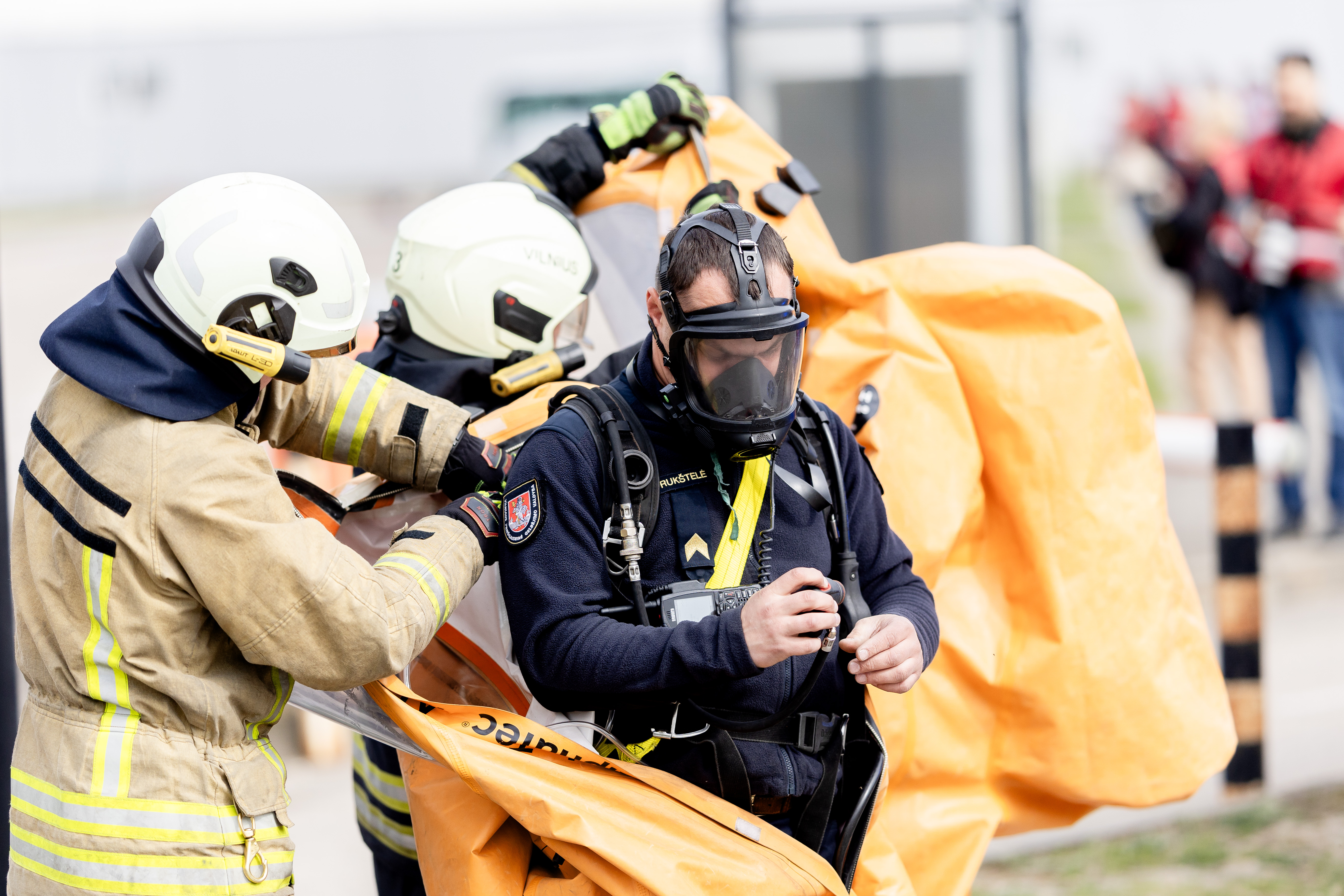
The Ministry of the Interior has prepared a draft amendment to the Law on Crisis Management and Civil Protection aimed at strengthening the country’s preparedness for crises, emergencies, and threats of war, and has started coordinating it with interested institutions. The draft proposes to define the concept of civil defense, improve regulations on population evacuation, warnings, and shelters, legalize joint rapid response teams, and introduce new facilities—civil protection assistance centers.
Data from the first half of 2020–2025 show that on average about 18 new emergencies are declared annually in Lithuania. As stated by the Minister of the Interior, Vladislavas Kondratovičius, crises and emergencies pose a direct threat to human life, health, essential living conditions, the functioning of state and municipal institutions, and public order.
“Crises and emergencies—both natural and man-made—pose a real danger to public safety, which is why it is necessary to predefine operational principles, common concepts, and have effective preparedness and response mechanisms in place. The proposed law aims to strengthen the civil defense system, which would include not only the protection of the population but also the continuity of vital state functions and support for the armed forces from the civilian sector,” emphasizes Minister V. Kondratovičius.
The concept of civil defense is proposed to be defined following the Swedish model, encompassing three main areas—protection of the population during peace and war times, continuity of state functions, and support for the armed forces. It is also planned to establish civil protection assistance centers in municipalities, which in the event of a crisis or war would provide residents with essential humanitarian services—food, water, heating, and electricity supply.
The establishment and operation of these centers would be coordinated by municipalities based on procedures and methodological recommendations set by the Government and prepared by the Fire Protection and Rescue Department.
The draft law proposes to improve the warning system by refining warning procedures and granting the Lithuanian Armed Forces the authority to make and implement decisions regarding warnings to the population about air threats and military aggression. This will enable faster population warning. The regulation of shelters will also be improved by introducing three levels of shelter classification based on the protection they provide.
It is planned to strengthen the evacuation process. State and municipal institutions and organizations, as well as other entities and economic operators, will be required, according to Government-established procedures, to be pre-prepared to carry out population evacuation. Evacuation preparedness must be planned in all levels of crisis and/or emergency management plans as well as in the detailed national population evacuation plan.
The draft also proposes to supplement the crisis management and civil protection system with three new operational principles: horizontal integration, civil-military cooperation, and contextuality.
These principles reflect the new European Union preparedness strategy and will help create a more flexible, clearly coordinated, and dynamic civil protection system. “Since the beginning of the war in Ukraine, we have seen the importance of having clear, pre-prepared response plans, strengthening population resilience, and ensuring joint readiness of the public and private sectors. This is exactly what we aim to achieve with this legislative amendment,” Minister V. Kondratovičius noted.
The draft amendments also foresee the need to create joint rapid response teams in regions, which in case of crisis could operate in a coordinated manner according to common, pre-agreed algorithms. Such teams will contribute to more effective responses to complex situations, especially those involving multiple types of threats simultaneously—for example, a natural disaster, infrastructure failure, and social tension.
The proposed amendments aim to ensure clearer institutional cooperation, strengthen population preparedness, and create a robust crisis management and civil protection system adapted to contemporary security challenges.
After coordination with interested institutions, the amendments will be submitted to the Government and later to the Parliament. It is expected that the amendments will come into force on January 1, 2027.